
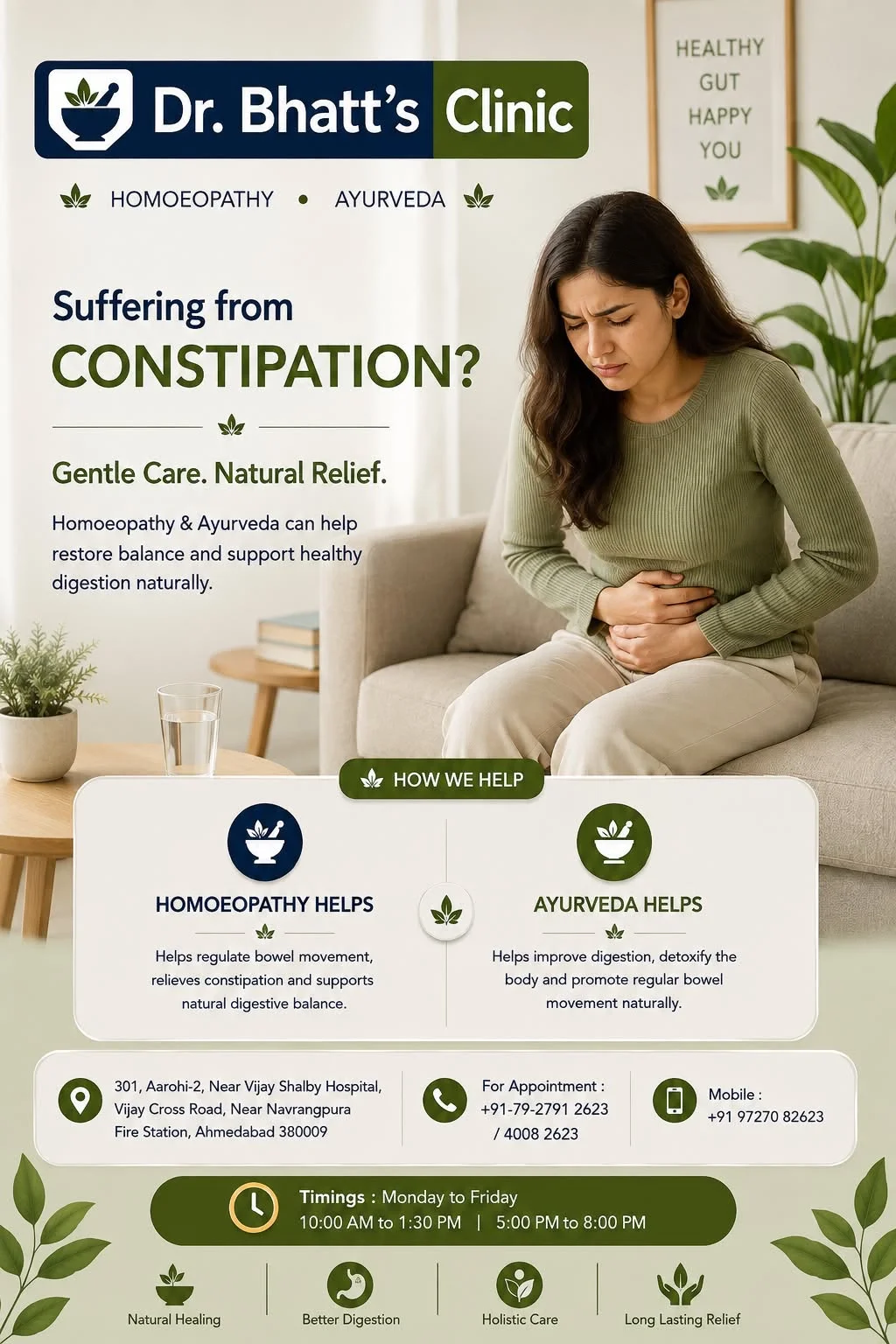
Constipation: Causes, Symptoms, Natural Management & Holistic Care with Homoeopathy and Ayurveda
By Dr. Nirav Bhatt, Homoeopathic Consultant - Dr. Bhatt's Clinic
September 22, 2026
Introduction
What is Constipation?
Constipation is not simply about having a bowel movement less frequently than someone else. Bowel habits vary from person to person.
Constipation may involve:
- Passing stools fewer than three times a week
- Hard, dry or lumpy stools
- Excessive straining while passing stools
- Pain or discomfort during bowel movements
- A feeling of incomplete evacuation
- Bloating or abdominal discomfort
According to the National Institute of Diabetes and Digestive and Kidney Diseases (NIDDK), these are common features of constipation.
A person does not necessarily need to pass stool every day to be considered healthy. The consistency of stool, ease of evacuation and individual bowel pattern are also important.
Common Causes of Constipation
Constipation can have several contributing factors, and more than one factor may be involved in the same person.
1. Low-fibre diet
A diet lacking adequate fruits, vegetables, whole grains and legumes can make stools harder and more difficult to pass.
Adults generally need around 22–34 grams of fibre per day, depending on age and sex. Fibre should preferably be increased gradually.
2. Inadequate fluid intake
Not drinking enough fluids can contribute to harder stools. Adequate hydration also helps fibre work effectively.
3. Lack of physical activity
A sedentary lifestyle and prolonged sitting may contribute to constipation. Regular physical activity can help promote more regular bowel movements.
4. Ignoring the urge to pass stool
Repeatedly postponing bowel movements can interfere with a healthy toilet routine.
5. Changes in routine
Travel, changes in diet, altered sleep patterns and changes in daily routine may affect bowel habits.
6. Certain medicines and supplements
Some medicines and supplements may contribute to constipation. These can include certain antacids, iron supplements, some medicines affecting the nervous system, certain pain medicines and other prescription drugs.
Do not stop any prescribed medicine on your own. Discuss possible side effects with your treating doctor.
7. Medical conditions
Constipation can sometimes occur with conditions such as:
- Hypothyroidism
- Diabetes
- Irritable bowel syndrome
- Certain neurological disorders
- Pelvic-floor disorders
- Structural problems of the digestive tract
Rarely, constipation may be associated with significant intestinal disease or obstruction.
Symptoms of Constipation
Constipation can present differently in different individuals.
Common symptoms include:
Digestive symptoms
- Hard or dry stools
- Infrequent bowel movements
- Difficulty passing stool
- Excessive straining
- Incomplete evacuation
- Abdominal discomfort
- Bloating
- Feeling of heaviness
Some people may also experience nausea or abdominal pain.
If constipation is persistent or recurrent, it is important to understand why it is occurring rather than repeatedly suppressing the symptom with self-medication.
Occasional vs Chronic Constipation
Occasional constipation
This may occur temporarily because of:
- Dietary changes
- Reduced fluid intake
- Travel
- Reduced physical activity
- Change in routine
- Temporary illness
It often improves with appropriate dietary and lifestyle changes.
Chronic or recurrent constipation
When constipation repeatedly returns or persists for a prolonged period, it deserves proper evaluation.
The goal should be to identify contributing factors and establish a sustainable bowel routine rather than relying indefinitely on self-medication.
What Can You Do Naturally to Support Healthy Bowel Movements?
Simple lifestyle measures can make a significant difference for many people.
1. Increase dietary fibre gradually
Include fibre-rich foods such as:
- Fruits
- Vegetables
- Whole grains
- Oats
- Pulses and legumes
- Nuts and seeds
Increase fibre gradually rather than suddenly, particularly if you already experience significant bloating.
2. Drink adequate fluids
Adequate water and fluid intake can help keep stools softer, particularly when dietary fibre is increased. Individual fluid requirements vary according to health, activity level, climate and other factors.
3. Stay physically active
Regular Yoga, walking and other suitable physical activity can support bowel regularity.
Even a simple daily walk can be a useful part of a healthy digestive routine.
4. Develop a regular toilet routine
Try to use the toilet at a regular time and allow yourself enough time without rushing.
Some people find it helpful to attempt a bowel movement after breakfast because eating can stimulate colonic activity.
5. Do not ignore the urge
When you feel the natural urge to pass stool, try not to postpone it unnecessarily.
6. Review your dietary pattern
Frequent intake of highly processed, low-fibre foods may contribute to constipation. A balanced diet containing adequate fibre, fluids and fresh foods is generally preferable.
How Ayurveda Approaches Constipation
In Ayurveda, digestive health and regular elimination are considered important components of overall wellbeing.
Constipation may be associated with an imbalance involving Vata, particularly when there is dryness, irregularity and difficulty in elimination. However, Ayurvedic assessment is individualised and considers factors such as:
- Prakriti
- Dietary habits
- Digestion
- Bowel pattern
- Lifestyle
- Sleep
- Stress
- Other associated symptoms
Ayurvedic management may therefore include personalised dietary advice, lifestyle modification and appropriately selected Ayurvedic medicines or therapies.
At Dr. Bhatt's Clinic, Ayurvedic management is planned according to the individual's presentation rather than using the same remedy for every person.
Ayurvedic care may focus on:
Dietary correction
Supporting digestion through appropriate food choices and meal routines.
Lifestyle modification
Improving daily routine, physical activity, sleep and bowel habits.
Individualised Ayurvedic medicines
Selected according to the person's constitution and digestive pattern by a qualified Ayurvedic practitioner.
Panchkarma when appropriate
Certain Ayurvedic procedures may be considered in selected patients after individual assessment. Panchkarma is not required for every person with constipation.
How Homoeopathy Approaches Constipation
Homoeopathy traditionally uses an individualised approach, where the total symptom picture is considered rather than treating constipation solely according to stool frequency.
During consultation, factors that may be explored include:
- Stool consistency
- Frequency of bowel movements
- Degree of straining
- Feeling of incomplete evacuation
- Time of occurrence
- Abdominal symptoms
- Dietary pattern
- Thirst and appetite
- Sleep
- Stress and emotional factors
- Other associated complaints
- Previous treatment history
A homoeopathic practitioner may use this overall symptom picture to select an individualised remedy.
Important: Homoeopathy should not be used as a substitute for evaluation of potentially serious causes of constipation. Persistent or unexplained constipation should be medically assessed.
Homoeopathy & Ayurveda: A Personalised Approach
At Dr. Bhatt's Clinic, Homoeopathy and Ayurveda are offered as distinct systems of care, with treatment selected according to the patient's individual needs.
The focus is not simply:
“How can we make the patient pass stool today?”
Instead, the broader questions are:
Why is constipation occurring?
How long has it been present?
What factors are maintaining it?
Are there associated digestive or systemic complaints?
What dietary and lifestyle changes are required?
This approach is particularly relevant when constipation is recurrent, long-standing or associated with other digestive complaints.
Constipation and Gut Health
Constipation is often discussed as an isolated problem, but bowel habits are closely connected with everyday lifestyle.
A healthy digestive routine generally involves:
Balanced diet → Adequate fibre → Adequate hydration → Physical activity → Regular bowel routine → Better digestive comfort
However, persistent constipation should not automatically be attributed to “poor digestion” or “toxins.” There can be multiple underlying causes, and proper assessment is important.
When Should You Consult a Doctor?
You should seek medical evaluation if constipation:
- Persists despite appropriate self-care
- Keeps recurring
- Is associated with significant abdominal pain
- Is accompanied by blood in the stool
- Is associated with unexplained weight loss
- Is accompanied by persistent bloating
- Develops suddenly with a significant change in bowel habits
- Is associated with vomiting or fever
- Occurs with inability to pass gas
NIDDK advises prompt medical attention for constipation associated with symptoms such as rectal bleeding, blood in stool, constant abdominal pain, inability to pass gas, vomiting, fever or unexplained weight loss.
Long-standing constipation can occasionally result in complications such as faecal impaction, which requires appropriate medical management.
Do Not Depend on Laxatives Indefinitely
Laxatives can have an important role in the management of constipation when appropriately selected.
However, if you regularly need laxatives to have a bowel movement, it is better to discuss the situation with a healthcare professional rather than continuing self-medication indefinitely.
The appropriate treatment depends on the cause and type of constipation.
A Simple Daily Routine for Better Bowel Health
A practical routine may include:
Morning
- Start the day with adequate fluids according to your individual needs.
- Give yourself sufficient time for bowel movement.
- Avoid unnecessary postponement of the urge.
During the day
- Include vegetables, fruits, whole grains and other fibre-rich foods.
- Stay adequately hydrated.
- Remain physically active.
Evening
- Prefer a balanced dinner rather than frequent heavy, highly processed meals.
- Maintain a regular sleep routine.
Most importantly, avoid making sudden and extreme dietary changes. Fibre should generally be increased gradually.
Constipation: Look Beyond the Symptom
Constipation may appear to be a small digestive complaint, but recurrent constipation can significantly affect comfort and quality of life.
Healthy bowel habits depend on multiple factors including diet, hydration, physical activity, bowel routine, medications, underlying health conditions and individual digestive patterns.
At Dr. Bhatt's Clinic, Navrangpura, Ahmedabad, we aim to understand the individual rather than treating every case of constipation in exactly the same way.
Through personalised Homoeopathy, Ayurveda and lifestyle guidance, the focus is on supporting digestive health and establishing healthier long-term habits.
When to Seek Personalised Care
If you are experiencing:
- Recurrent constipation
- Chronic constipation
- Constipation with bloating
- Difficult or painful stool passage
- Incomplete evacuation
- Constipation associated with other digestive complaints
- Repeated dependence on laxatives
a personalized consultation may help determine the appropriate next step.
Take-Home Message
Constipation is more than simply “not passing stool.”
Healthy bowel function depends on regularity, stool consistency, comfortable evacuation and the absence of concerning symptoms.
Start with the basics:
Eat well • Drink adequately • Move regularly • Maintain a bowel routine • Don't ignore the urge • Seek professional advice when constipation persists
For recurrent or chronic constipation, identifying the underlying contributing factors is more important than repeatedly suppressing the symptom.